Skip to content

Samsung Odyssey G8 OLED G80SD Review: 4K/240Hz Monitor

David Park David Park 6 min read

Samsung Odyssey G8 OLED G80SD Review

The Samsung Odyssey G8 OLED G80SD combines a 32-inch class OLED panel with 4K UHD resolution and a 240 Hz refresh rate, making it one of the most capable gaming monitors on paper. This evaluation compares Samsung's published specifications and documentation with independent reporting from PCWorld, PC Gamer, and TFTCentral to assess what the monitor is designed to deliver and what reputable reviewers report.

Samsung Canada's official product page lists the Odyssey OLED G8 G80SD as 4K at 3,840 x 2,160 with a 16:9 aspect ratio, a typical brightness of 250 cd/m², a 1,000,000:1 static contrast ratio, and a 0.03ms GTG response time alongside a maximum 240 Hz refresh rate. HDR10 and HDR10+ Gaming support is included, plus 99% DCI coverage for color gamut. These numbers frame the entire buying decision: this is a premium gaming-and-creator crossover display on paper.

Performance for fast gaming is the G80SD's strongest straightforward argument. Samsung Canada explicitly links its 240Hz Refresh Rate and 0.03ms Response Time GTG messaging to HDMI 2.1 and DisplayPort connectivity for UHD at high refresh. In practical terms, 240 Hz at 4K is about motion clarity and latency feel, assuming your GPU can drive the frame rate and you're playing titles that benefit.

The biggest differentiator has nothing to do with pixels: it's the built-in smart platform. PCWorld highlights that the Odyssey OLED G8 includes wireless connectivity and runs Samsung's Tizen OS, which requires a more involved first-time setup than a classic plug-in-and-go monitor. If you like the idea of launching cloud gaming or streaming apps directly on the display, that's a real convenience win; if you want a pure monitor experience with minimal menus and zero onboarding friction, it's a trade-off you should treat as central.

Reviewed by David Park Updated How we rate

Key Takeaways

  • 4K OLED panel with 240 Hz refresh rate and 0.03ms GTG response time per Samsung Canada specifications
  • QD-OLED technology with 99% DCI-P3 coverage and 1,000,000:1 static contrast ratio for vivid color and deep blacks
  • Built-in Tizen OS smart platform adds streaming and cloud gaming but requires more setup than a standard monitor
  • HDR10 and HDR10+ Gaming support with 250 nits typical brightness and up to 1,000 nits peak HDR per independent reports
  • Premium pricing around $1,099 to $1,299.99 MSRP targets buyers who value the OLED-plus-smart-platform combination

Performance and Display Quality

Samsung Canada states the Odyssey OLED G8 G80SD delivers 4K UHD at 3,840 x 2,160 with a 16:9 aspect ratio on a 32-inch class OLED panel. The maximum refresh rate is 240 Hz, and the published response time is 0.03ms GTG. These specifications position the monitor as a high-performance gaming display capable of delivering smooth motion and minimal blur when paired with a capable GPU.

Image quality fundamentals rest on the OLED panel characteristics. Samsung Canada's spec table calls out a 1,000,000:1 static contrast ratio and 99% DCI-P3 coverage. PCWorld summarizes the panel as Samsung QD-OLED and reiterates HDR10+ Gaming support, aligning with Samsung Canada's HDR listings. For buyers who care about color work as much as games, the published gamut target of 99% DCI-P3 indicates the monitor aims beyond standard-gamut output.

Brightness and HDR capabilities show the typical OLED behavior pattern. Samsung Canada states 250 nits typical brightness in its feature text and spec section. PC Gamer's spec rundown lists 250 nits full screen with 1,000 nits max HDR, and TFTCentral notes the model carries a peak brightness spec of 1,000 nits while explaining why OLED luminance can drop as average picture level rises. The G80SD's published story is consistent with how HDR-capable OLED monitors behave: very strong highlight potential in small areas, but not the same always-bright look you'd expect from the brightest backlit panels.

Connectivity options include HDMI 2.1 and DisplayPort 1.4 according to Samsung Canada and PCWorld, supporting the high refresh rate at 4K resolution. The inputs are current-generation for gaming sources, ensuring compatibility with modern graphics cards and consoles that can output 4K at high frame rates.

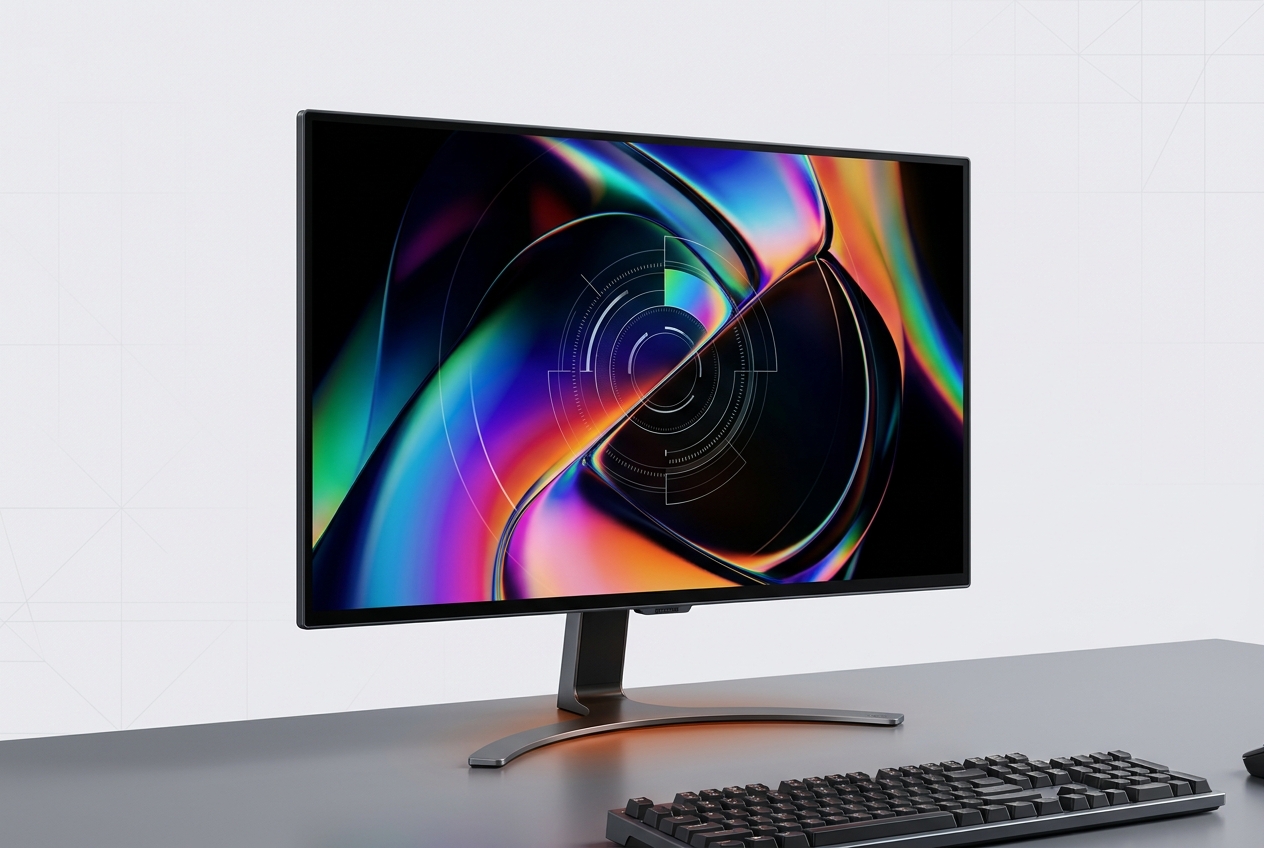
Samsung Odyssey OLED G8 G80SD monitor front view on desk
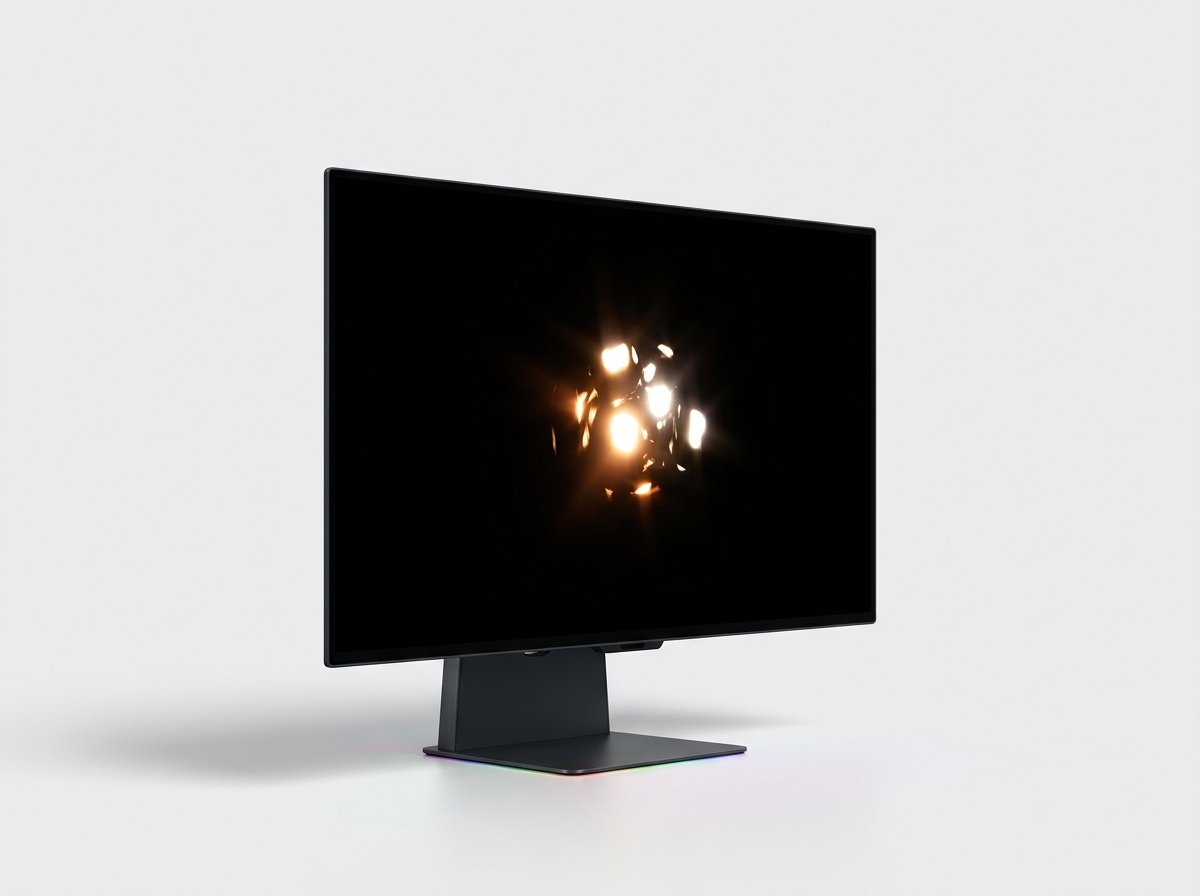
Samsung Odyssey OLED G8 G80SD 32-inch gaming monitor

Core Specifications Summary

  • 32-inch class OLED panel with 3,840 x 2,160 4K UHD resolution
  • 240 Hz maximum refresh rate with 0.03ms GTG response time
  • QD-OLED technology with 99% DCI-P3 color coverage
  • 1,000,000:1 static contrast ratio and HDR10 plus HDR10+ Gaming support
  • 250 nits typical brightness, up to 1,000 nits peak HDR
  • HDMI 2.1 and DisplayPort 1.4 inputs for high refresh gaming
  • Built-in Tizen OS smart platform with streaming and cloud gaming apps
  • Samsung OLED Safeguard+ features with burn-in warranty coverage for normal usage

Smart Platform Integration

The Odyssey OLED G8 runs Tizen OS, adding streaming and cloud gaming directly on the display

Evaluating the G80SD Against Core Criteria

Motion Clarity

The 240 Hz refresh rate and 0.03ms GTG response time published by Samsung Canada place the G80SD in the top tier for gaming performance on paper. PCWorld and PC Gamer both reference the 240 Hz specification in their coverage. In practical terms, motion clarity at this refresh rate is about delivering smooth visuals in fast-paced games, assuming your GPU can drive the frame rate. Independent reports confirm the monitor meets its high refresh specifications, making it a strong choice for competitive gaming and esports titles where every frame matters.

Color and Contrast

Samsung Canada's published 99% DCI-P3 coverage and 1,000,000:1 static contrast ratio indicate wide color gamut and deep blacks characteristic of OLED technology. PCWorld describes the panel as QD-OLED, which aligns with the color performance claims. For content creators and professionals, the wide gamut target suggests the monitor is designed for color-critical work beyond standard sRGB output. The OLED contrast ratio means dark scenes display with clean separation and no backlight bleed, a significant advantage over edge-lit LCD panels in mixed lighting conditions.

Smart Features

The built-in Tizen OS is the G80SD's most divisive feature. PCWorld highlights that the monitor includes wireless connectivity and runs Samsung's smart platform, requiring a more involved first-time setup including Wi-Fi connection and app selection. Samsung Canada frames the product as an entertainment hub with Gaming Hub access. If you value launching cloud gaming or streaming apps directly on the display without a separate device, this is a genuine convenience advantage. If you prefer a pure monitor experience with minimal menus and instant plug-in operation, the smart platform is overhead you'll navigate around rather than use.

Brightness and HDR Capabilities

Brightness and HDR Capabilities

HDR Performance

Samsung Canada lists 250 cd/m² typical brightness for the G80SD in both its feature text and specification section, establishing the baseline luminance expectation. PC Gamer's specification rundown reports 250 nits full screen alongside a 1,000 nits maximum HDR figure, while TFTCentral documents the 1,000-nit peak brightness specification and explains the characteristic OLED behavior where luminance decreases as average picture level rises. This published pattern aligns with how HDR-capable OLED monitors perform across the category: exceptional highlight punch in confined areas of the frame, but sustained full-screen output remains bounded by panel physics rather than matching the constant high brightness of premium backlit displays.

The published gamut target of 99% DCI-P3 indicates the monitor aims beyond standard-gamut output

Design and Setup Considerations

The Samsung Odyssey OLED G8 G80SD introduces several design and setup factors that differ from traditional monitors, primarily due to its smart platform integration and OLED panel characteristics.

  • Built-in Tizen OS requires Wi-Fi setup and app configuration PCWorld highlights more involved first-time setup than plug-in-and-go monitors
  • Smart platform adds streaming and cloud gaming directly on display Samsung Canada frames product as entertainment hub with Gaming Hub access
  • OLED Safeguard+ features for burn-in risk reduction Samsung Canada lists burn-in warranty for normal usage conditions
  • 32-inch class flat panel with 16:9 aspect ratio Samsung Canada specifications confirm standard gaming monitor form factor
  • HDMI 2.1 and DisplayPort 1.4 connectivity for high refresh gaming Current-generation inputs support 4K at 240 Hz refresh rate
Value Assessment

Premium Pricing for Combined Features

PCWorld reported an MSRP of $1,299.99 with typical street pricing around $1,099 at the time of its review, placing the G80SD firmly in premium territory for a 32-inch class gaming monitor.

Verdict and Buying Considerations

The Samsung Odyssey G8 OLED G80SD is best for buyers who explicitly want a 32-inch class 4K OLED monitor with a 240 Hz ceiling and modern inputs, and who either value or at least tolerate the integrated smart interface. PCWorld's reported MSRP of $1,299.99 with typical street pricing around $1,099 places it firmly in premium territory. The real question is whether you're paying primarily for the panel-plus-refresh combo, which is 4K at 240 Hz on OLED, or whether you'll actually use the smart platform. If you won't, you may resent paying for complexity you didn't ask for.

Across the scoring criteria that matter to most buyers, the pattern from published specifications and independent reporting is consistent. Motion performance reads as top-tier with 240 Hz and 0.03ms GTG. HDR capability looks strong in highlights but bounded by OLED luminance behavior, with 250 nits typical and a 1,000-nit peak spec. Color potential is clearly aimed at wide-gamut work with 99% DCI-P3 coverage listed by Samsung Canada. Connectivity is current-generation for gaming sources with HDMI 2.1 and DisplayPort 1.4. Ease-of-use is the swing factor: the smart platform adds features but can also add friction.

It's a weaker fit for purists who want the simplest possible monitor experience, or for anyone shopping primarily on value rather than on the specific combination of OLED contrast, 4K detail, and high refresh. The built-in Tizen OS is the most divisive feature, and whether it's an advantage or overhead depends entirely on your use case. For buyers who will use the streaming and cloud gaming features, it's a legitimate selling point. For those who won't, it's setup friction and menu complexity with no payoff.

Burn-in risk management is another ownership reality that matters. Samsung Canada's burn-in warranty covers normal usage but excludes commercial use, abuse, or misuse. That doesn't make burn-in impossible, but it's a concrete policy note that should factor into the decision if your daily workload includes static UI elements. The OLED Safeguard+ features are intended to reduce risk, but the warranty language itself makes clear that burn-in remains a possibility under certain usage patterns.

The G80SD succeeds as a spec-flex product: it delivers 4K UHD resolution on a 32-inch OLED panel at 240 Hz, which is exactly what Samsung promises. Independent reports from PCWorld, PC Gamer, and TFTCentral confirm the monitor meets its published specifications for refresh rate, response time, and color gamut. The smart platform integration is the differentiator that will either seal the deal or send buyers elsewhere, depending on whether they see it as a feature or a complication.

David Park

David Park

Monitor Technology Writer

David covers monitor buying guides and technology explainers, synthesizing technical documentation and market research to help readers navigate display specifications and features.

Sources

  1. Samsung Canada — 32 Inch Odyssey OLED G8 G80SD Gaming Monitor | LS32DG800SNXZA | Samsung Canada
  2. Samsung US — 32" 4K UHD G80SD Odyssey OLED G8 Gaming Monitor | Samsung US
  3. Samsung Electronics America — Samsung Expands Odyssey Gaming Monitor Lineup With New OLED Models at CES 2024
  4. PCWorld — Samsung OLED G8 review: This monitor is also a TV, for better or worse
  5. PC Gamer — Samsung Odyssey G8 OLED G80SD review
  6. TFTCentral — Samsung Odyssey G80SD Review