Skip to content

About Us

Clarity for display decisions

Monitor Maven exists to make monitor shopping less noisy and more checkable. Instead of hype and vague best claims, the site is built around what you can verify: published specifications, official documentation, and clearly cited public reporting. The goal is simple: help you choose a display that fits your work and your desk without forcing you to become an expert in panel tech, ports, or marketing terms.

This publication is written for people who care about details — gamers, creators, and professionals — because the wrong display choice is expensive in time, money, and daily friction. A monitor is where you aim, grade, edit, read, build, and ship; small differences in clarity, motion handling, and connectivity can reshape the whole experience.

As of September 2026, Monitor Maven is an independent, non-commission site: there are no affiliate commissions, no sponsored verdicts, and no paid placements shaping the rankings. If a product is recommended, it is because the published record supports it — not because a link pays.

The promise is not perfection — it is inspectability. When the public record is strong, Monitor Maven is comfortable being decisive. When it is weak, the site says so, marks uncertainty clearly, and avoids filling gaps with confident-sounding guesses. Verdicts come from what is published, documented, and consistently reported — not from a hidden lab.

What Monitor Maven covers

Core decision points

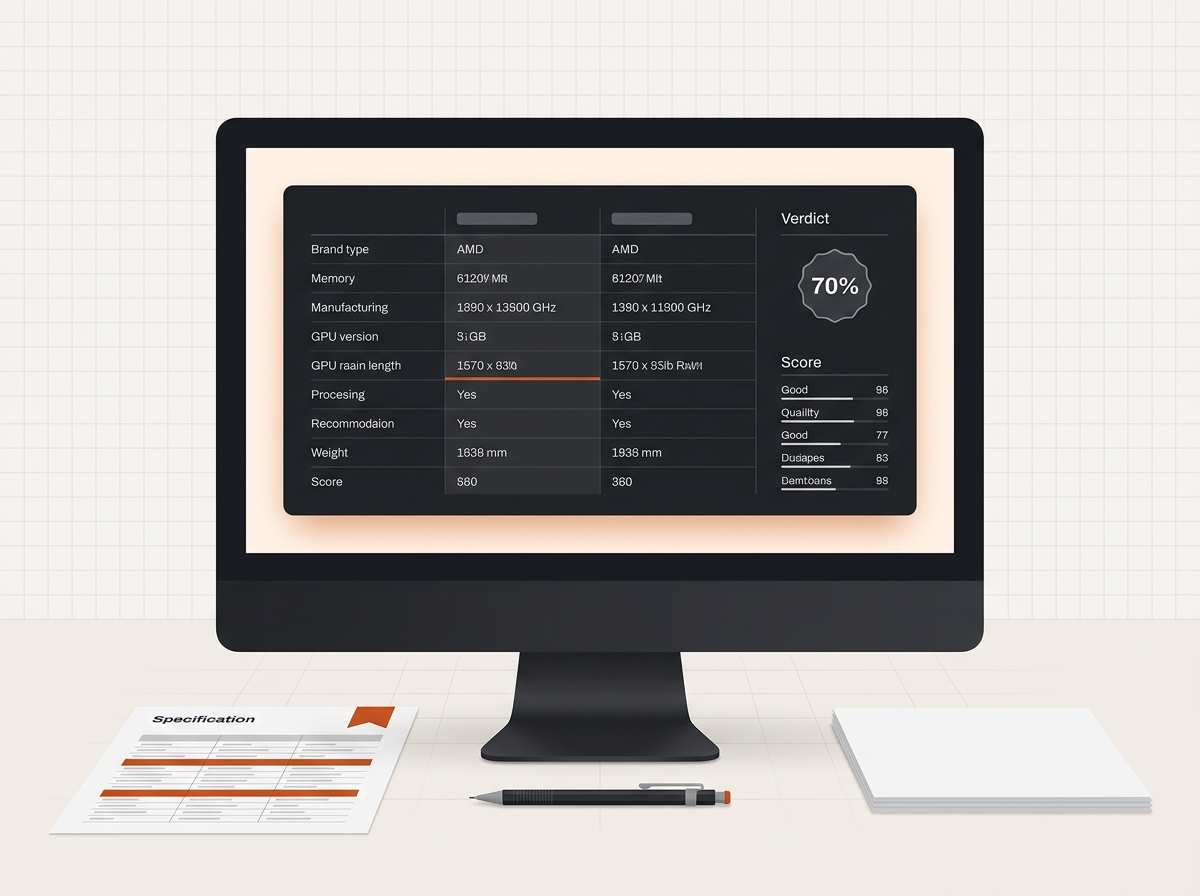
Monitor Maven focuses on computer monitors and the decisions that usually decide the purchase: panel type, resolution and scaling, refresh rate expectations, HDR claims and limits, connectivity and bandwidth, ergonomics, and warranty terms. You will see the trade-offs spelled out in plain language, with the source trail left visible so you can double-check. Reviews follow a documented desk-research process that compares manufacturer pages, manuals, published retailer pricing, published customer reviews and ratings, and independent public reporting.

Who it is for

Most readers land here while deep in a purchase decision — typically ages 18–45, with enough technical comfort to care about the difference between a port standard and a marketing label. The content is designed to be scannable when you are comparing models fast, and deep enough when you need to validate a spec before you spend. The intended reader range is 18–45, and the visual system is built around a four-color, high-contrast palette designed for dense tables and side-by-side comparisons.

What we do not claim

Monitor Maven does not run a lab, does not handle review units, and does not publish first-hand measurements. When specs conflict, policies are unclear, or feature names are reused across generations, Monitor Maven focuses on what is actually stated in public sources.

Conclusions you can audit

Conclusions you can audit

Transparency first

The current catalog includes 5 monitor entries presented as structured review cards. The content is organized around three primary use cases: gaming, creation, and professional productivity. Verdicts are built by lining up public specs, documentation, price snapshots from retailers, and widely repeated user-reported patterns — so you are not comparing a feature set that only exists in a promo image.

Monitor Maven is built for readers who want the receipts — clear sources, clear limits, and conclusions you can audit.

Four-step decision process

Before you compare models, define the non-negotiables for your use: resolution targets, refresh-rate expectations, color needs, and the port path from your GPU to the panel.


  1. Step 1

    Define the job

    Before you compare models, define the non-negotiables for your use: resolution targets, refresh-rate expectations, color needs, and the port path from your GPU to the panel.

  2. Step 2

    Filter the noise

    Ignore spec-sheet bait that does not survive the fine print. Monitor Maven flags the spots where marketing names, bandwidth limits, and up to language can mislead.

  3. Step 3

    Compare like with like

    Shortlists are built by lining up public specs, documentation, price snapshots from retailers, and widely repeated user-reported patterns — so you are not comparing a feature set that only exists in a promo image.

  4. Step 4

    Buy with eyes open

    The last check is always policy: warranty terms, return windows where published, and any manufacturer language that matters if you end up with dead pixels, firmware quirks, or panel uniformity concerns.

Start here

Choose your next display with less guessing

Go straight to Monitor Reviews or explore our buying guides to find the display that fits your work and your desk.